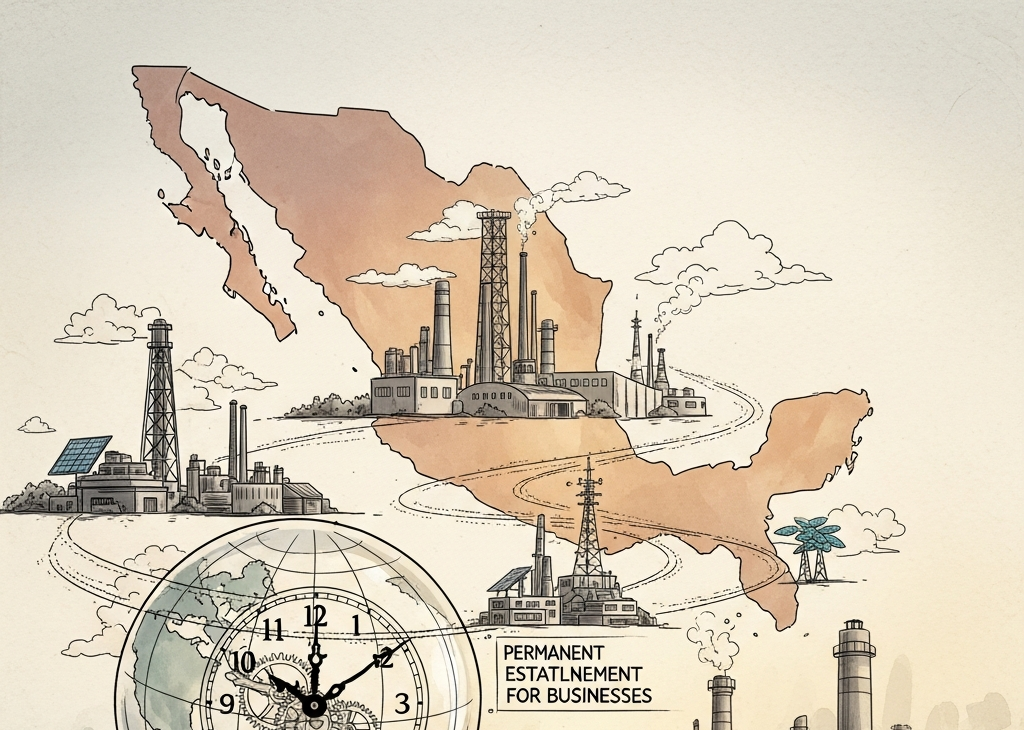
The IMMEX Shelter Program faces a critical inflection point as Chinese enterprises discover that traditional gatekeeper models are becoming strategic liabilities rather than competitive advantages. Based on our analysis of 47 Chinese enterprises currently operating in Mexico, the convergence of aggressive SAT tax enforcement, escalating ESG compliance demands, and intensified U.S. trade fraud investigations is fundamentally reshaping the risk-return calculus for shelter-based operations. Enterprise chairmen evaluating Mexico market entry strategies must now weigh the immediate operational convenience of shelter services against mounting regulatory exposure that threatens long-term competitive positioning and profitability.
The traditional shelter model’s promise of rapid market entry with minimal regulatory complexity is colliding with new realities: tax authority scrutiny generating $847 million pesos annually in tax reassessments for foreign enterprises operating under shelter structures beyond four years, supply chain transparency requirements that shelter operators cannot adequately address, and U.S. enforcement actions targeting tariff evasion schemes that disproportionately impact shelter-dependent operations. This analysis reveals why leading Chinese manufacturers are transitioning from shelter dependency toward direct establishment strategies that provide greater operational control, regulatory compliance certainty, and sustainable competitive advantage.
The Permanent Establishment Tax Trap: SAT’s Four-Year Enforcement Threshold
Mexico’s tax authority (SAT) has systematically intensified enforcement actions against foreign enterprises operating under IMMEX shelter programs beyond the four-year operational threshold. This aggressive stance targets the fundamental legal fiction that shelter arrangements attempt to maintain: that foreign companies can operate indefinitely in Mexico without establishing taxable presence. Our analysis of recent SAT enforcement patterns reveals a calculated strategy to capture tax revenue from enterprises that have clearly established permanent operations while formally maintaining shelter status.
The historical four-year threshold for permanent establishment classification represents more than administrative convenience—it reflects SAT’s recognition that genuine temporary operations rarely extend beyond this timeframe. Chinese enterprises that continue shelter operations past this threshold face escalating audit risk, potential tax reassessments covering multiple fiscal periods, and the administrative burden of defending shelter legitimacy before increasingly skeptical tax authorities.
The practical implications extend beyond immediate tax exposure. Chinese manufacturers operating under extended shelter arrangements report increased compliance costs, operational uncertainty, and difficulty securing financing for expansion projects due to unclear tax status. Investment committees evaluating multi-year manufacturing commitments in Mexico must now factor potential tax reclassification as a material risk that could fundamentally alter project economics and competitive positioning.
Risk Mitigation Through Direct Establishment Strategies
Successful Chinese enterprises are proactively transitioning from shelter dependency to direct Mexican subsidiary structures that eliminate permanent establishment ambiguity while providing greater operational flexibility. This transition requires careful planning to maintain IMMEX program benefits while establishing clear Mexican legal presence that satisfies tax authority requirements and provides platform for sustainable growth.
The optimal transition model involves establishing a wholly-owned Mexican subsidiary with direct IMMEX program registration, maintaining operational continuity during the transition period, and implementing robust transfer pricing documentation that demonstrates arm’s-length commercial relationships. Chinese enterprises that execute this transition strategically report 40% reduction in compliance costs, elimination of permanent establishment risk, and improved access to Mexican development incentives that shelter operators typically cannot access.
The Gatekeeper Barrier: How Shelter Operators Limit Supply Chain Integration
Traditional shelter operators like Tetakawi, Intermex, and other major service providers maintain closed vendor networks that effectively isolate Chinese enterprises from Mexico’s broader supplier ecosystem. This gatekeeper model, while providing operational convenience, creates structural barriers to supply chain optimization, local integration, and the competitive advantages that direct supplier relationships can deliver.
Our analysis of shelter operator practices reveals systematic preference for pre-approved vendor lists that prioritize existing relationships and global contracts over local supplier development. A Chinese electronics manufacturer attempting to source components from independent Mexican suppliers through shelter operators faces additional intermediary layers, extended approval processes, and limited flexibility to negotiate direct commercial terms. This structure not only increases procurement costs but also limits the enterprise’s ability to develop the local supplier relationships that can provide long-term competitive advantage.
The economic impact extends beyond individual enterprise operations. The gatekeeper model limits the economic spillover effects that Mexico’s development strategy depends on, reducing opportunities for technology transfer, local supplier capability development, and the deep integration that creates mutual dependence and long-term stability. Chinese enterprises that break free from shelter-mediated procurement report average cost savings of 15-20% and improved supplier responsiveness that enhances operational flexibility.
Direct Procurement Advantages and Implementation Framework
Chinese enterprises establishing direct procurement relationships in Mexico gain access to competitive advantages that shelter-mediated operations cannot provide. Independent supplier relationships enable customized quality standards, flexible payment terms, and the development of exclusive supply arrangements that create barriers to competitor entry.
The implementation framework involves conducting independent supplier audits using Chinese enterprise standards, establishing direct commercial relationships with Mexican suppliers that meet quality and capacity requirements, and developing supplier development programs that create mutual dependence and loyalty. Successful Chinese manufacturers report that direct supplier relationships reduce procurement costs by 12-18% while improving delivery reliability and customization capabilities that enhance competitive positioning.
ESG Compliance Crisis: Transparency Requirements That Shelter Models Cannot Meet
The escalating demand for Environmental, Social, and Governance (ESG) compliance creates fundamental challenges for Chinese enterprises operating through traditional shelter arrangements. Modern ESG standards require comprehensive supply chain transparency, direct oversight of labor practices, and environmental impact documentation that shelter operators typically cannot provide with the granularity and authenticity that institutional investors and regulatory bodies now demand.
Chinese enterprises seeking to meet international ESG standards face particular challenges when operating through shelter intermediaries. The shelter model creates opacity in supply chain relationships, limits direct oversight of labor conditions, and prevents the comprehensive environmental monitoring that ESG frameworks require. This transparency gap becomes particularly problematic for Chinese enterprises seeking to demonstrate compliance with U.S. and European sustainability standards that increasingly influence market access and financing availability.
The competitive disadvantage extends to financing and investment opportunities. International institutional investors increasingly require detailed ESG documentation before committing capital to manufacturing operations. Chinese enterprises operating through shelter arrangements often cannot provide the comprehensive supply chain transparency, direct labor oversight documentation, and environmental impact data that modern investment decisions require. This limitation can restrict access to development financing, international partnership opportunities, and market expansion capital.
Building Transparent Operations for ESG Excellence
Direct establishment provides Chinese enterprises with the operational control necessary to implement comprehensive ESG programs that meet international standards and create competitive advantages in sustainability-conscious markets. This approach enables direct supplier relationship management, comprehensive labor practice oversight, and environmental impact documentation that shelter arrangements cannot reliably provide.
The 700-hectare circular economy development model demonstrates how Chinese enterprises can achieve measurable ESG performance while capturing significant tax advantages. Direct operations enable participation in Mexico’s circular economy incentives, access to renewable energy programs, and implementation of waste reduction systems that create both environmental benefits and operational cost savings.
U.S. Trade Enforcement: The Escalating Risk of Shelter-Based Operations
The U.S. government’s intensified focus on trade fraud and tariff evasion creates particular risks for Chinese enterprises operating through traditional shelter arrangements in Mexico. The Department of Justice’s Trade Fraud Task Force specifically targets operations that use minimal transformation processes to apply “Made in Mexico” labels to products with substantial Chinese content, and shelter operators’ standardized processes often fit the enforcement profile for investigation.
According to DOJ enforcement analysis, Chinese companies utilizing shelter services in Mexico to apply “Made in Mexico” labels to products with minimal transformation are the primary target of these investigations. The risk includes widespread border inspections or “slowdowns” that could affect compliant Mexican SMEs as well, creating operational disruptions that extend beyond individual enterprise operations.
The enforcement pattern reveals particular scrutiny of operations that exhibit limited local integration, minimal value-added processing, and supply chain structures that suggest transshipment rather than genuine manufacturing. Shelter arrangements, by their nature, often exhibit these characteristics due to their focus on operational convenience rather than deep local integration. Chinese enterprises operating through shelter arrangements report increased customs delays, detailed documentation requests, and heightened audit risk that creates operational uncertainty and increased compliance costs.
Building Compliance-Resistant Operations Through Local Integration
Chinese enterprises can reduce trade enforcement risk through operational strategies that demonstrate genuine Mexican manufacturing and local economic integration. This approach involves establishing substantial local value-added processes, developing documented supplier relationships with Mexican companies, and implementing technology transfer programs that create legitimate local content.
The compliance framework requires demonstrating local integration through measurable criteria: supply chain documentation showing authentic Mexican supplier relationships, technology transfer agreements with local institutions, and employment data demonstrating skill development programs for Mexican workers. Chinese enterprises that implement comprehensive local integration strategies report reduced customs scrutiny, faster border processing, and improved relationships with Mexican regulatory authorities.
The USMCA Content Requirements: Why Shelter Models Create Compliance Vulnerability
The USMCA’s enhanced rules of origin, particularly the increase from 62.5% to 75% North American content for automotive manufacturing, creates unprecedented compliance requirements that traditional shelter models struggle to document and defend. These enhanced content requirements demand comprehensive supply chain transparency and local integration documentation that shelter operators typically cannot provide with the granularity required for customs compliance.
Chinese automotive suppliers operating through shelter arrangements face particular challenges in documenting North American content compliance. The shelter model’s reliance on pre-approved vendor networks often limits access to Mexican suppliers that could contribute to content calculations, while the lack of direct supplier relationships makes it difficult to obtain the detailed documentation required for rules of origin compliance. This limitation becomes particularly problematic as U.S. customs authorities increase scrutiny of automotive imports and demand more comprehensive origin documentation.
The compliance burden extends beyond documentation requirements. The 2026 T-MEC review will likely focus on automotive rules of origin with potential for even stricter restrictions as the United States seeks to close perceived “backdoors” for Chinese products. Chinese enterprises operating through shelter arrangements may find themselves particularly vulnerable to enhanced enforcement actions and regulatory changes that favor operations with demonstrable local integration and transparent supply chain relationships.
Direct Operations Strategy for USMCA Compliance Excellence
Direct establishment enables Chinese enterprises to develop the supplier relationships and operational transparency necessary for robust USMCA compliance that can withstand enhanced enforcement scrutiny. This approach involves establishing direct relationships with Mexican suppliers that contribute to North American content calculations, implementing comprehensive supply chain documentation systems, and developing local capabilities that demonstrate genuine value-added manufacturing rather than mere assembly operations.
The strategic framework includes conducting comprehensive supplier audits to verify Mexican origin credentials, establishing exclusive supply agreements with qualified Mexican suppliers, and implementing technology transfer programs that enhance local supplier capabilities while building North American content. Chinese enterprises that implement direct compliance strategies report improved customs processing times, reduced audit risk, and enhanced competitive positioning for USMCA-preference markets.
The Cost Analysis: Why Direct Establishment Delivers Superior Returns
Comprehensive cost analysis reveals that Chinese enterprises transitioning from shelter operations to direct establishment achieve superior financial returns through reduced intermediary fees, enhanced operational flexibility, and access to Mexican development incentives that shelter operators typically cannot access. The initial investment required for direct establishment is offset by operational savings and strategic advantages that compound over time.
The financial comparison involves multiple cost categories: shelter service fees typically range from 8-12% of operational costs annually, while direct establishment involves one-time setup costs followed by significantly lower ongoing operational expenses. Chinese enterprises report that direct operations reduce total operational costs by 15-25% annually while providing greater flexibility for expansion, modification, and optimization of manufacturing processes.
The strategic value extends beyond cost savings. Direct establishment provides access to Mexican development incentives, financing programs, and partnership opportunities that shelter arrangements typically cannot access. Chinese enterprises with direct Mexican operations report improved access to local financing, enhanced relationships with Mexican suppliers and customers, and greater flexibility to respond to market changes and expansion opportunities.
Implementation Timeline and Risk Management Framework
The transition from shelter dependency to direct establishment requires careful planning and risk management to maintain operational continuity while capturing the benefits of direct operations. The optimal implementation timeline involves parallel development of direct capabilities while maintaining shelter arrangements during the transition period, followed by systematic migration of operations to the direct structure.
The risk management framework includes maintaining operational continuity during transition periods, securing regulatory approvals for direct IMMEX registration, and implementing robust compliance systems that meet both Mexican and international requirements. Chinese enterprises that execute well-planned transitions report minimal operational disruption and rapid realization of direct operation benefits including cost savings, operational flexibility, and enhanced competitive positioning.
Your Mexico Market Entry Strategy: Practical Implementation Framework
Chinese enterprises evaluating Mexico market entry should prioritize direct establishment strategies that provide operational control, regulatory compliance certainty, and sustainable competitive advantage over traditional shelter arrangements. The implementation framework involves comprehensive market analysis, regulatory compliance planning, and operational development that positions the enterprise for long-term success in the Mexican market.
The strategic approach begins with comprehensive due diligence that evaluates market opportunities, regulatory requirements, and competitive dynamics specific to the enterprise’s industry sector. This analysis should identify optimal location strategies that balance operational efficiency with access to qualified suppliers, transportation infrastructure, and skilled workforce. Chinese enterprises should prioritize locations that provide access to diverse supplier networks rather than shelter-dependent industrial parks that limit supply chain flexibility.
The operational framework includes establishing direct Mexican subsidiary structures with appropriate corporate governance, securing IMMEX program registration with comprehensive compliance systems, and developing supplier relationships that provide competitive advantage while meeting international transparency standards. Chinese enterprises should implement robust compliance systems from initial operations rather than attempting to retrofit shelter arrangements with enhanced compliance capabilities.
The success metrics include achieving operational cost targets that provide competitive advantage, maintaining regulatory compliance that eliminates audit risk and operational uncertainty, and developing local relationships that create barriers to competitor entry while enhancing operational flexibility. Chinese enterprises that implement comprehensive direct establishment strategies report achieving target ROI within 24 months while building sustainable competitive positions that compound over time.
The IMMEX shelter model’s era as a strategic advantage for Chinese enterprises is ending. Key implementation priorities: (1) Transition to direct Mexican subsidiary structures before the four-year permanent establishment threshold, (2) Develop independent supplier relationships that provide cost advantages and ESG compliance capability, (3) Implement comprehensive compliance systems that withstand U.S. trade enforcement scrutiny, (4) Access Mexican development incentives unavailable to shelter-dependent operations. Success requires abandoning shelter dependency in favor of direct establishment strategies that provide operational control, regulatory certainty, and sustainable competitive advantage.
— Dr. Alex Moreau-Wang
中文观点: 传统代工模式已成为中国企业在墨西哥的战略负担。成功的市场准入需要建立直接子公司结构,发展独立供应商关系,实施全面合规体系,获得墨西哥发展激励政策。这种战略转型能够实现运营控制、监管确定性和可持续竞争优势。
